Market Structure
Exchanges, market makers, liquidity, settlement, and how trades actually happen.
5 guides12+ key termsTopic quiz available
The market structure curriculum
Intermediate3 guides
Short Selling
How do you profit when a stock falls? You borrow it, sell it, and buy it back cheaper. Short selling is one of the market's most powerful — and most dangerous — mechanics: theoretically unlimited losses, a borrow fee, dividends you owe, and the ever-present risk of a short squeeze. Learn exactly how it works, where the borrowed shares come from, and why the risk is shaped so differently from going long.
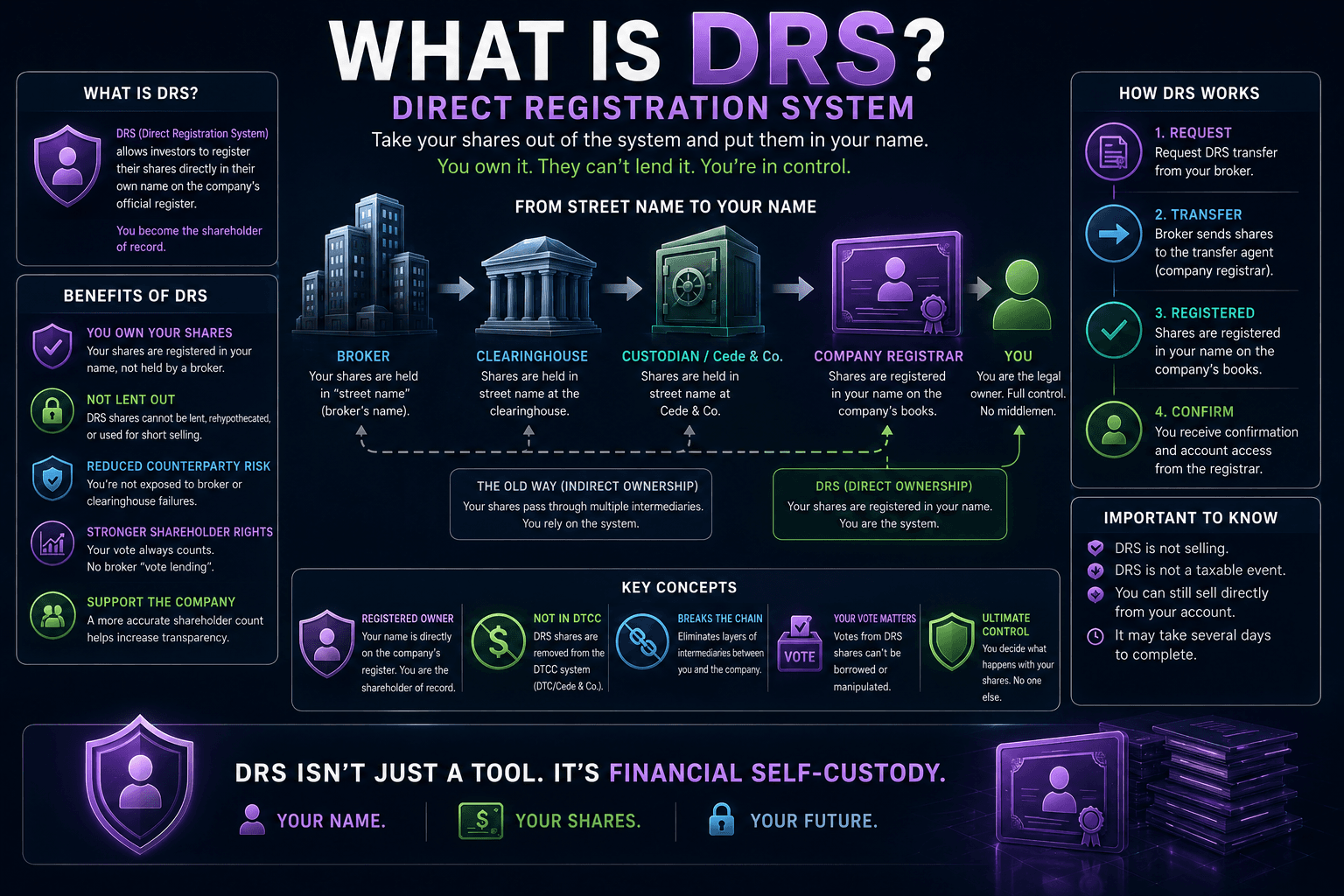
What Is DRS?
A clear, balanced guide to the Direct Registration System: how shares are normally held in street name, what it means to register directly in your own name, the genuine benefits and real trade-offs, and how to think about it.
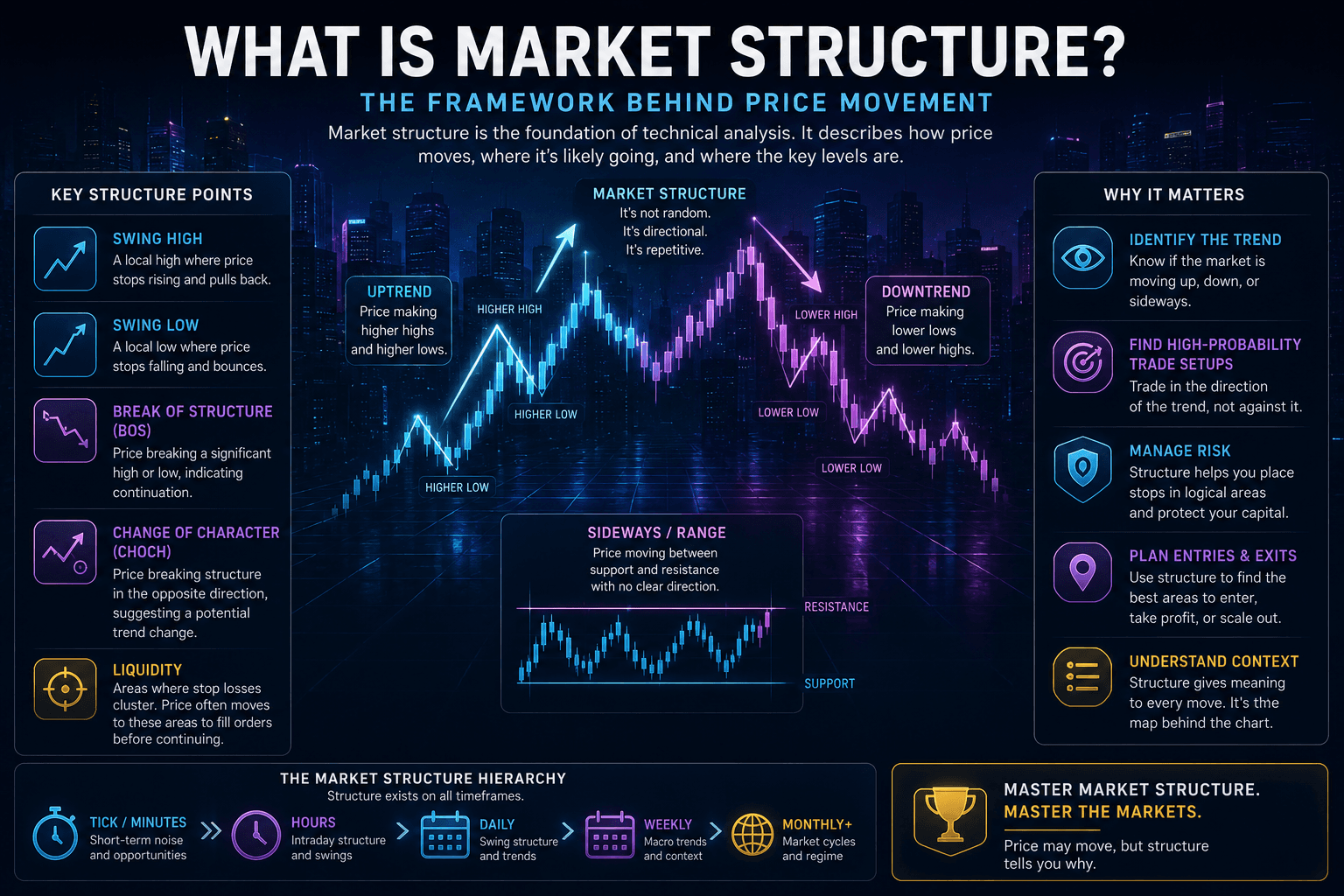
What Is Market Structure?
A guide to the hidden plumbing of the markets: the players, how a trade really travels from your tap to settlement, what the order book and liquidity mean, lit venues versus dark pools, and why it all affects the price you get.
Advanced2 guides
Naked Short Selling
Ordinary short selling borrows shares before selling them. Naked short selling skips that step — selling shares that were never borrowed or arranged for. It is tightly regulated in the US, it is one way 'fails to deliver' can arise, and it sits at the centre of one of the most heated debates in modern markets. Learn what it is, what Regulation SHO actually requires, the market-maker exemption, and how to read the controversy without the myths.
Reading Short-Selling Data: Short Interest, Short Volume & Cost to Borrow
Three numbers get quoted endlessly to judge how heavily a stock is shorted — short interest, short volume, and cost to borrow — and two of them are constantly misread. Learn what each actually measures, why short volume is NOT short interest, why short interest can legitimately exceed 100% of the float, and why the borrow fee is often the most honest real-time signal of the three.