Brokers & Accounts
How brokers work, how they make money, and the accounts you can use.
10 guides12+ key termsTopic quiz available
The brokers & accounts curriculum
Beginner7 guides
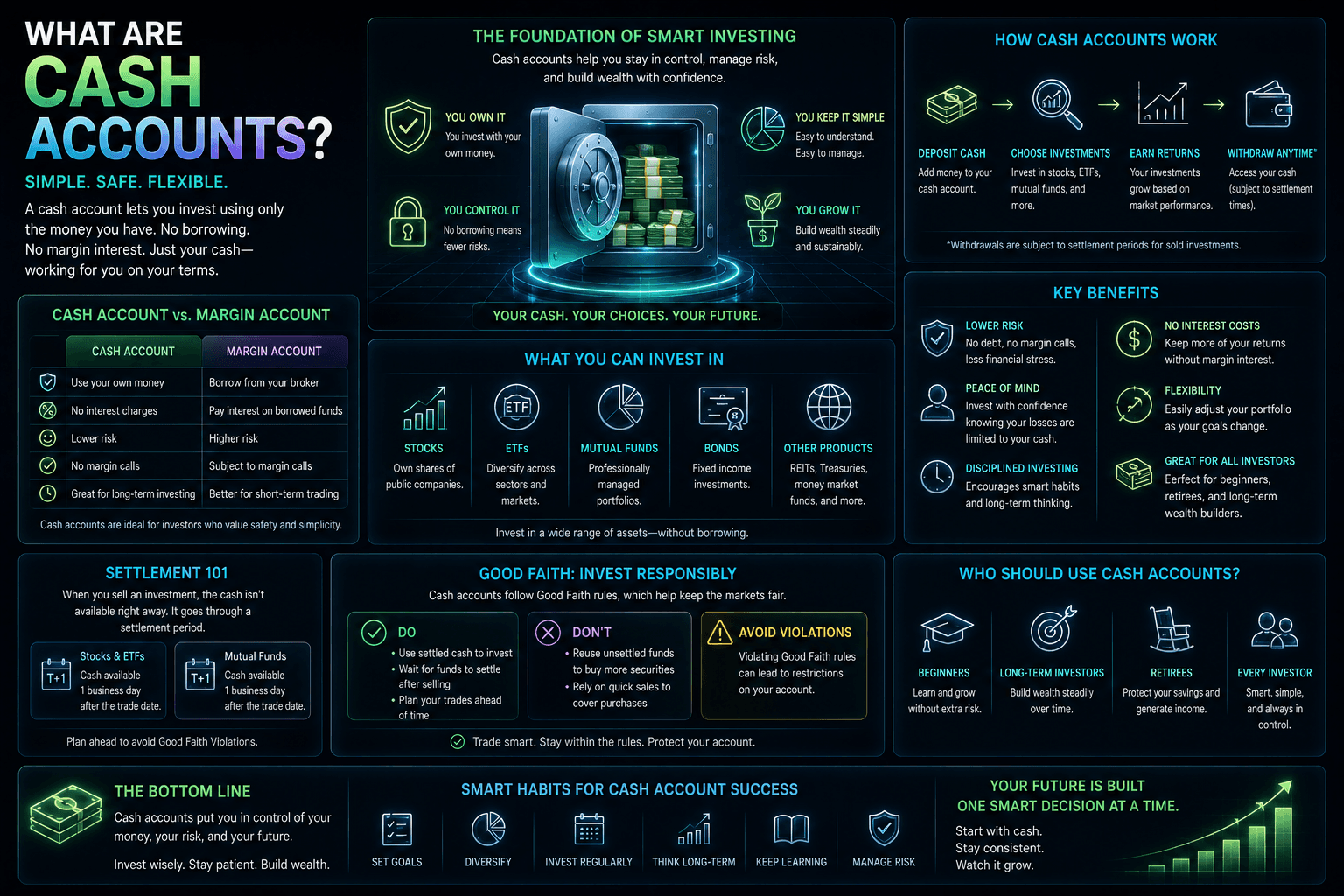
Cash Accounts
The simple, sensible default brokerage account: what a cash account is, how settlement and settled funds work, why it carries no borrowing risk, what happens to uninvested cash, and why it suits almost every beginner.
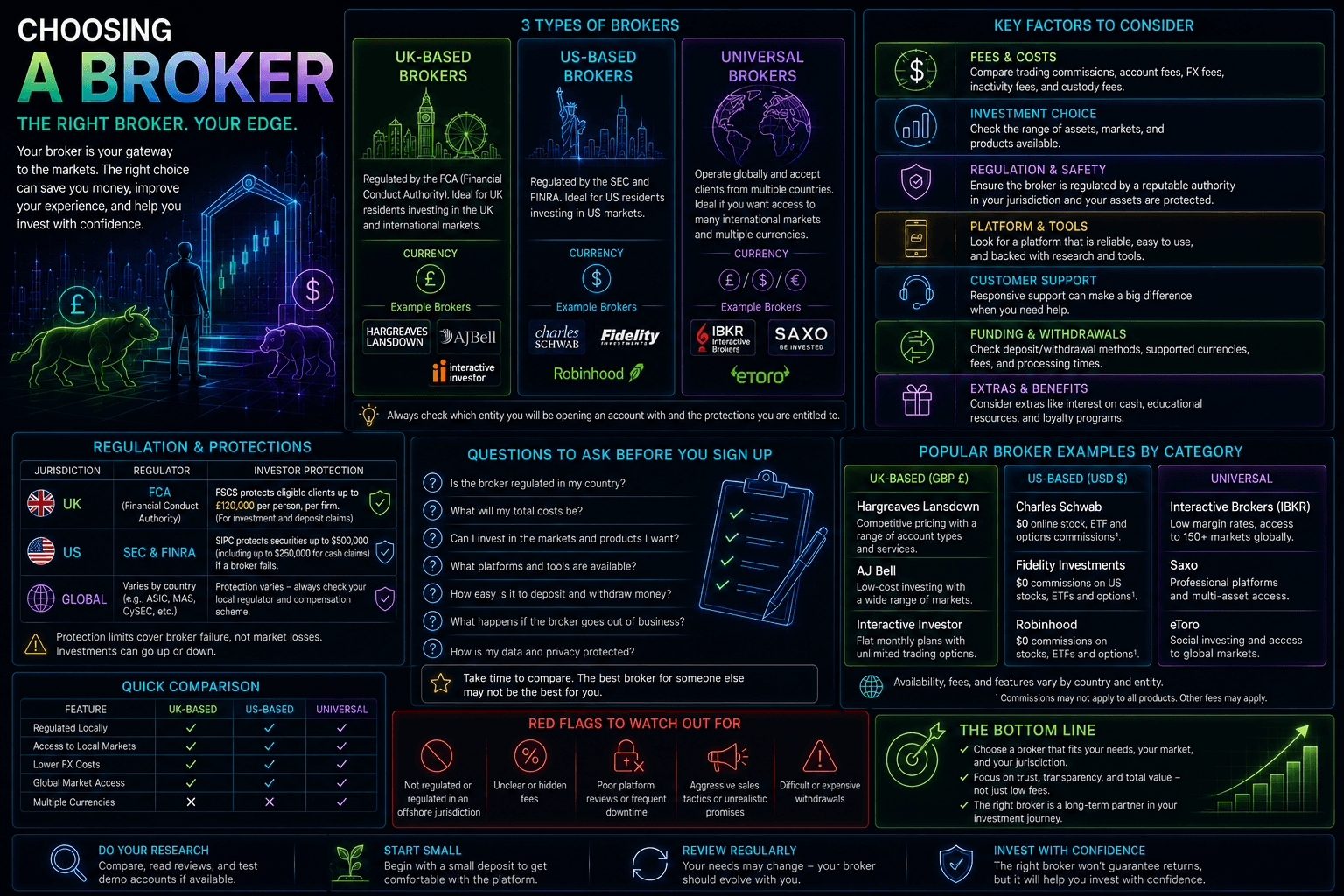
Choosing A Broker
A practical framework for picking the right broker: why regulation and investor protection come first, how to judge true all-in cost, which account types and investments to check for, and how to match a broker to the way you actually invest.
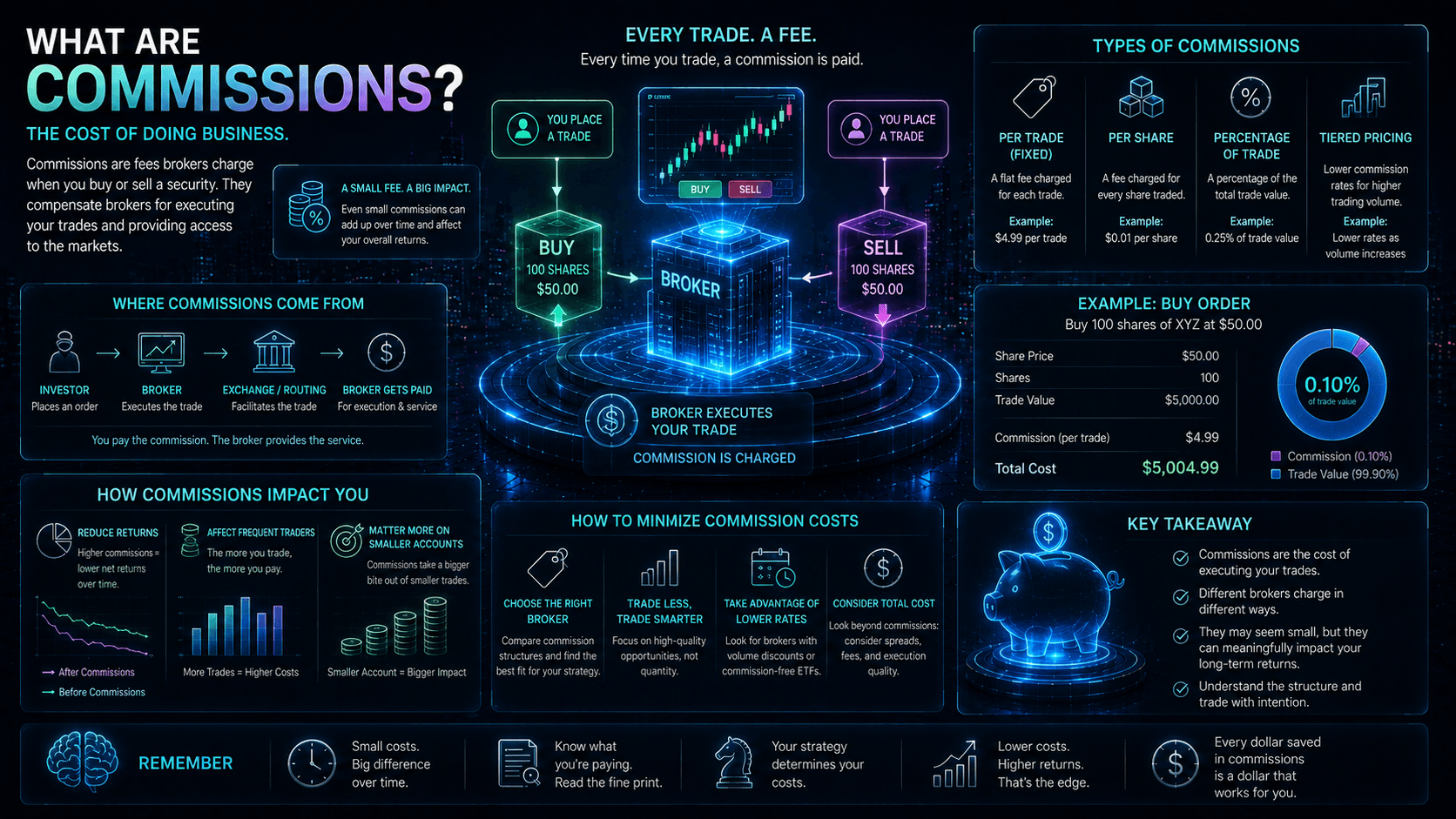
Commissions
The explicit cost of trading: what commissions are, the forms they take, how the spread and currency fees act as hidden commissions, why 'commission-free' isn't free, and how trading costs quietly erode returns.

How Brokers Make Money
A complete map of every way a broker earns — commissions, spreads, payment for order flow, margin interest, interest on your cash, securities lending, FX and fees — and which revenue streams align with your interests and which work against them.
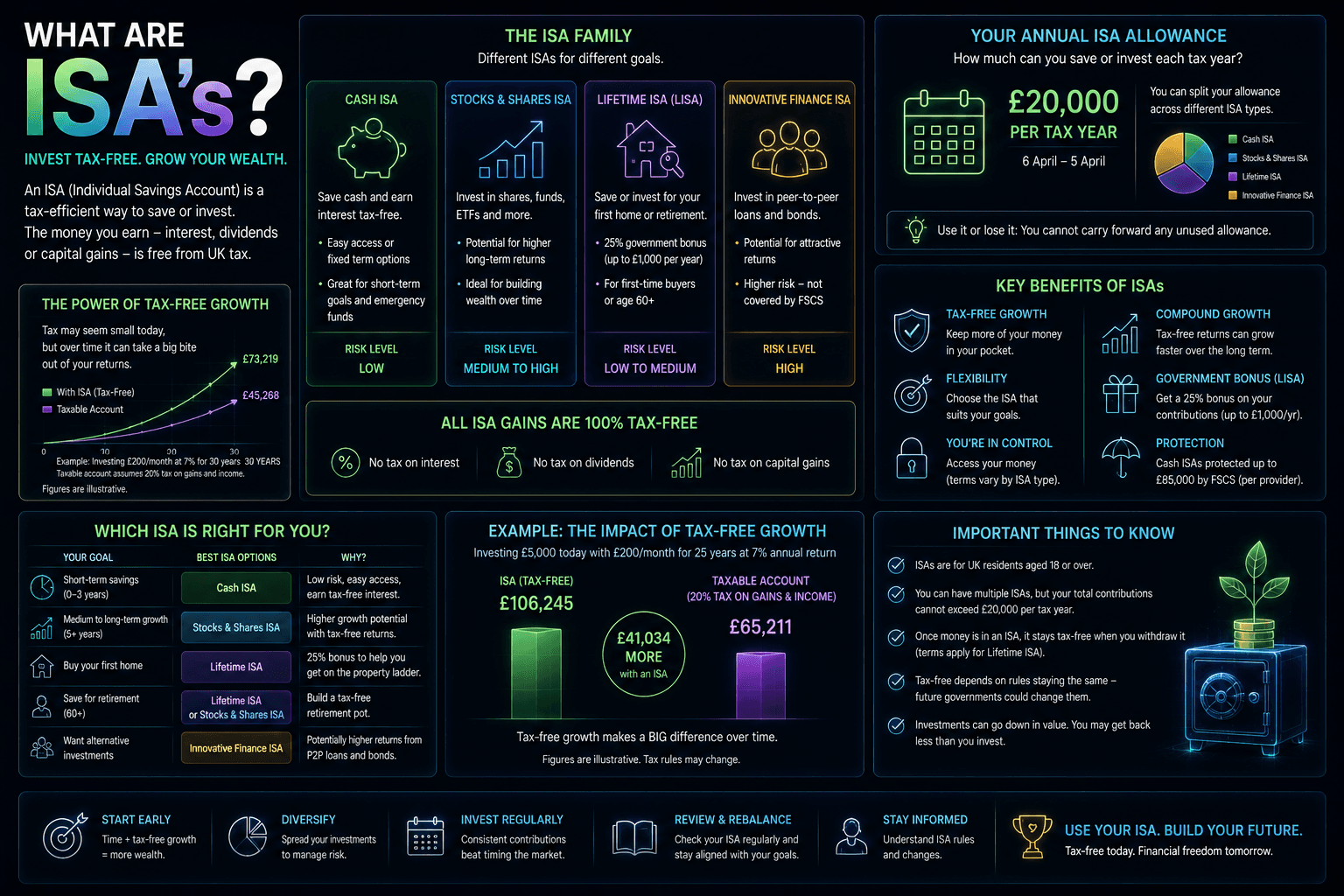
ISAs
The UK's tax-free wrapper for saving and investing: what an ISA is, the main types, the annual allowance, why tax-free growth and withdrawals matter so much over time, and how the Stocks & Shares ISA fits a long-term plan.
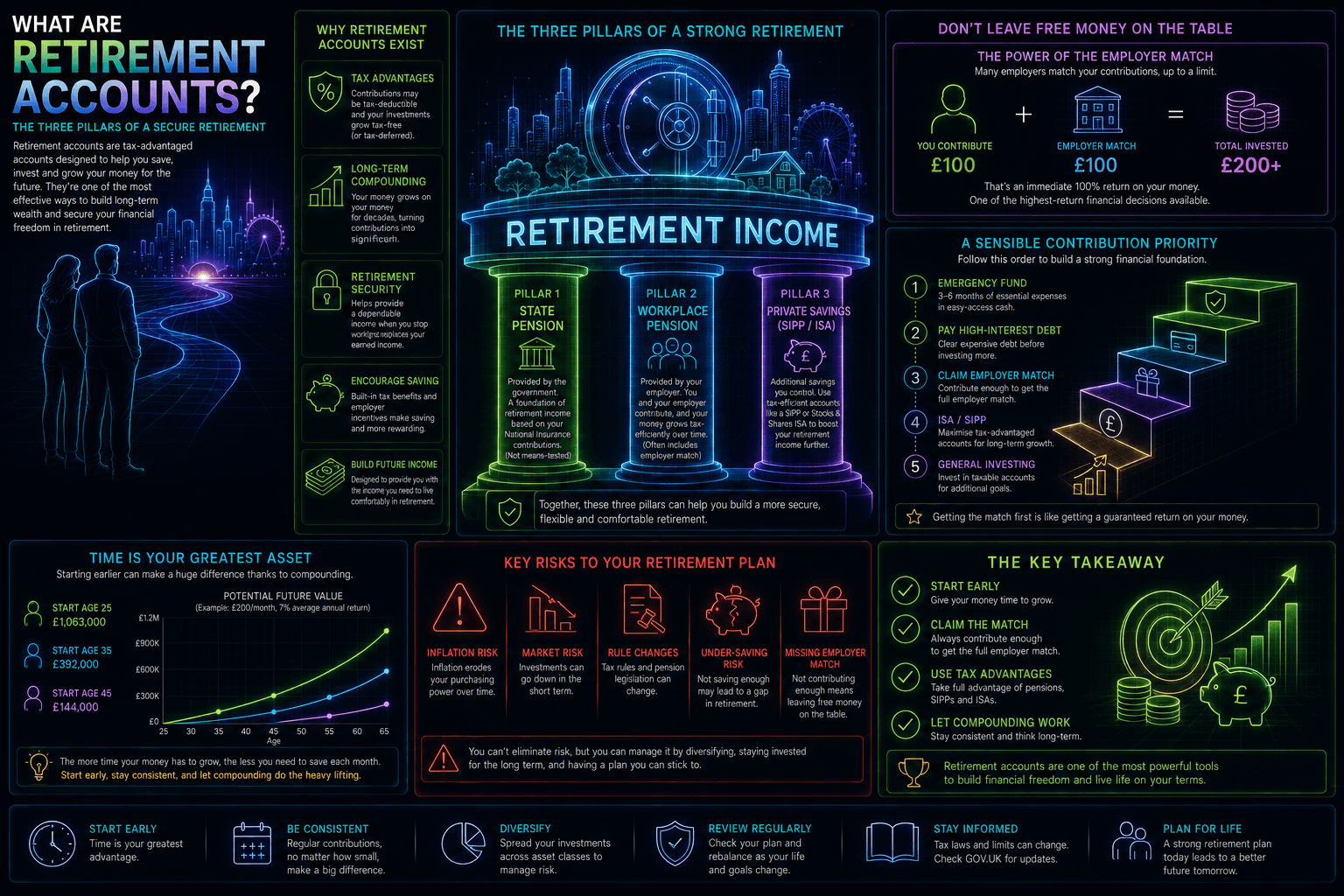
Retirement Accounts
The big picture of saving for retirement: why tax-advantaged retirement accounts exist, the three pillars (state, workplace and private pensions), why an employer match is free money to claim first, and the priority order for your contributions.

What Is A Broker?
A complete guide to brokers: what they do, why you need one, how they actually make money, the journey of an order, how your shares are held, and how to choose one safely.
Intermediate2 guides
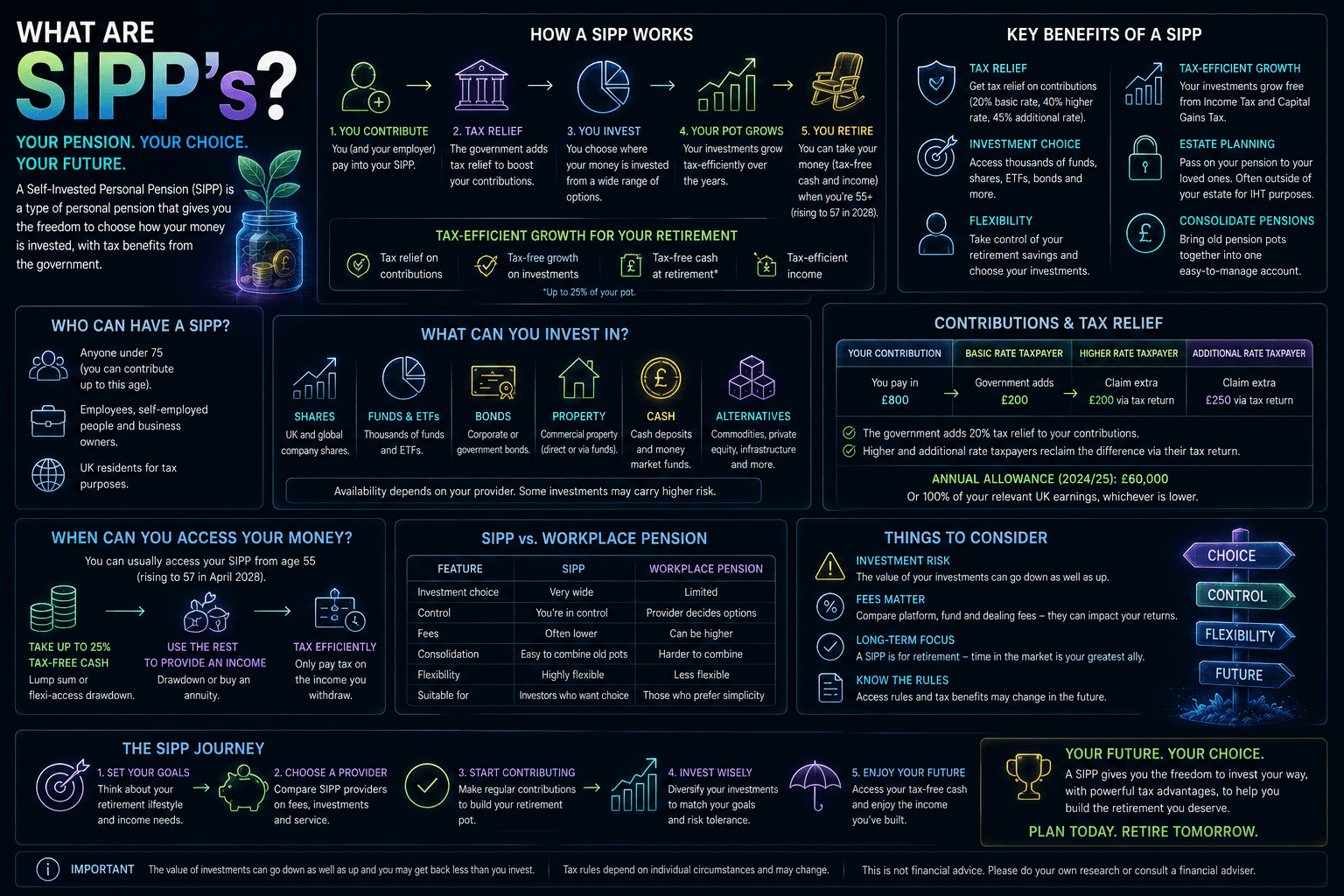
SIPPs
The UK's self-invested personal pension: how a SIPP works, the tax relief that boosts contributions, why the money is locked until a minimum age, how withdrawals are taxed, and how it compares with an ISA.
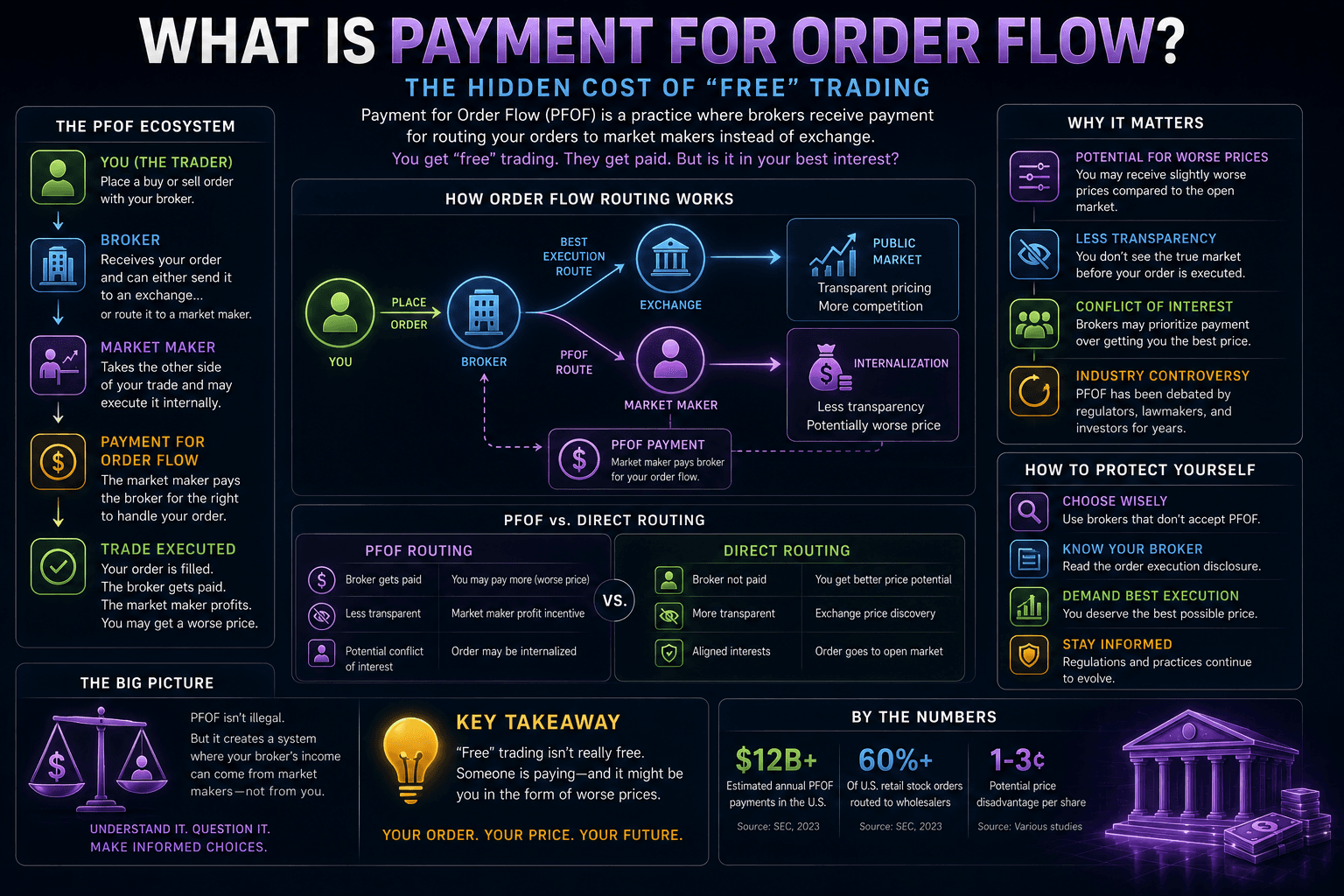
What Is Payment For Order Flow?
A balanced explanation of payment for order flow: how it funds commission-free trading, why market makers pay for retail orders, the conflict of interest it creates, price improvement and the NBBO, and what it means for you.